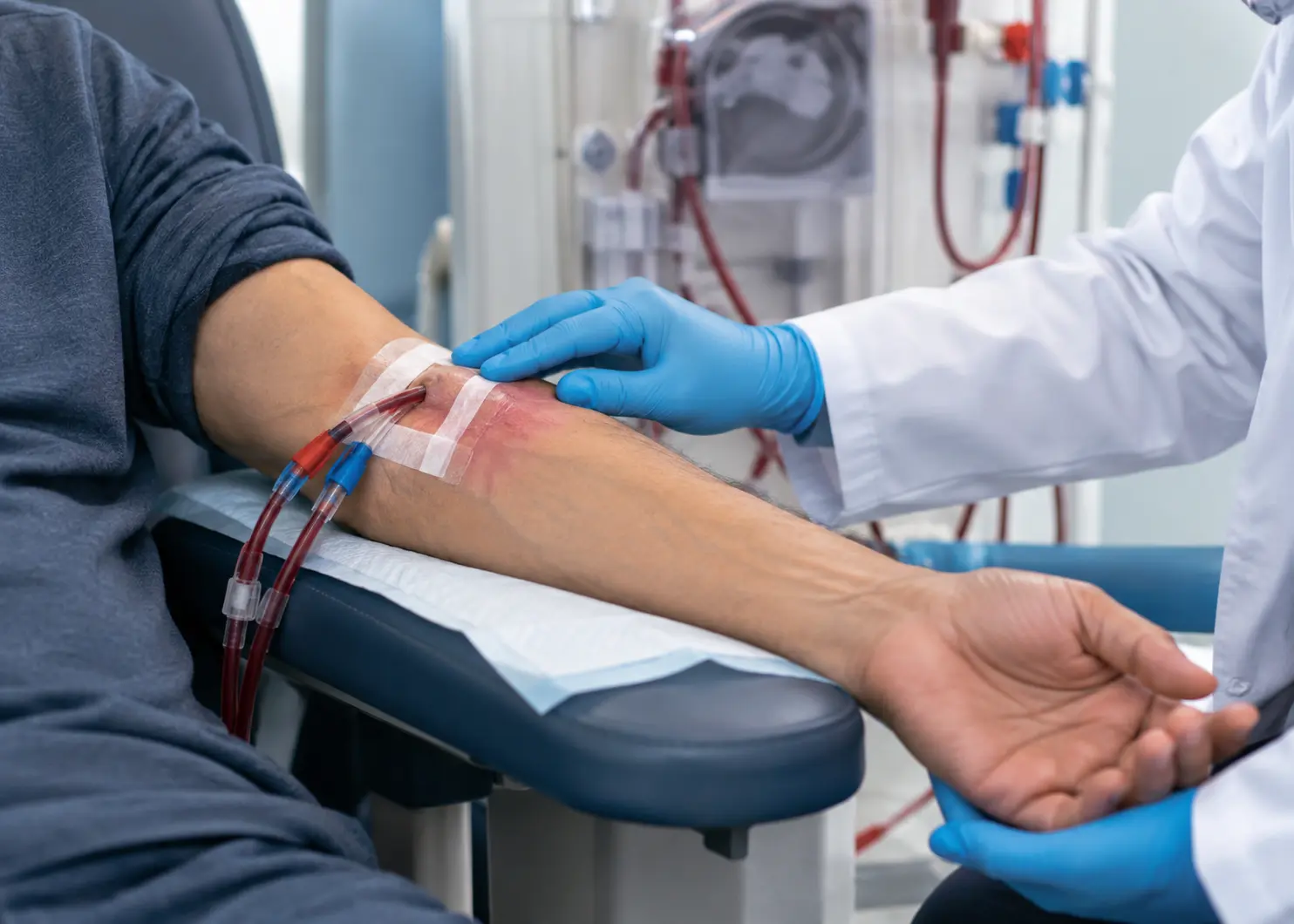


If you rely on dialysis to manage kidney disease, your vascular access site works hard for you several times a week. Whether it is a fistula, a graft, or a catheter, this access point is your lifeline to treatment, so keeping it healthy matters just as much as the treatment itself. A dialysis access infection can develop quietly at first, then escalate quickly if it is not caught early. Knowing the signs of dialysis access infection gives you a real advantage, because the sooner a problem is noticed, the sooner it can be addressed.
This blog walks through what a dialysis access infection can look like, why access site care deserves daily attention, and when it makes sense to contact your care team. None of this is meant to replace guidance from your nephrologist or dialysis nurse. Think of it as a starting point for the kind of conversation worth having at your next appointment.
Every time you sit down for treatment, your access site is the doorway between the outside world and your bloodstream. That makes it a spot where bacteria can potentially enter if the skin barrier is broken or if hygiene steps are missed. People on dialysis often check their access multiple times a day out of habit, and that habit is worth building if you have not already. A dialysis access infection tends to start small: a bit of redness, some warmth, maybe a little tenderness. Catching these small changes early is part of what makes daily checks so valuable.
Catheter-based access is generally considered to carry a higher infection risk compared with a fistula or graft, since catheters sit partially outside the body. That said, any type of access can become infected, so the habit of checking in matters regardless of which type you have.
Recognizing the signs of dialysis access infection early can make a meaningful difference in how quickly things get resolved. Some of the more commonly reported signs include:
Not everyone experiences all of these signs, and some people notice subtle changes before anything looks visibly different. If something feels off with your access, even if you cannot quite explain why, it is worth mentioning to your care team rather than waiting to see if it resolves on its own.
A dialysis access infection does not usually appear overnight. It often begins with a small opening in the skin, sometimes from needle insertion during treatment, and bacteria can find their way in from there. For catheter access, the exit site where the catheter leaves the body is a particularly important area to monitor, since it is more directly exposed. If you use a catheter, understanding dialysis catheter placement and removal can also help you understand why catheter sites require careful attention.
Left unaddressed, a localized infection at the access site can potentially spread further into the bloodstream, which is one of the reasons dialysis centers place so much emphasis on hand hygiene, sterile technique, and site cleaning before and after every session. Your care team follows these steps carefully, but your own observations between sessions play a role too, since you are the one who sees and feels your access site every day.
Supporting your access site does not require anything complicated, just consistency. A few habits that many patients find helpful include:
These small steps, done consistently, can help reduce the chances of irritation that might otherwise turn into something more serious. If you are ever unsure whether a product or habit is safe for your access site, asking your nephrology team directly is always a reasonable move. Your care team can also explain the treatment options available for kidney disease based on your individual situation.
Timing matters when it comes to a possible dialysis access infection. If you notice redness that is spreading, drainage, fever, or pain that feels different from your normal baseline, reaching out to your dialysis center or nephrologist promptly is generally recommended rather than waiting until your next scheduled visit. Many centers have a nurse line or on-call provider for exactly this kind of situation.
It also helps to mention any changes during your regular sessions, even minor ones. Dialysis staff monitor access sites closely and can often spot early warning signs that might be harder for patients to notice themselves. Being an active participant in that conversation, rather than a passive one, tends to lead to better outcomes over time.
Living with kidney disease comes with a lot to manage, and your dialysis access site should not be something you have to worry about alone. The team at Dallas Renal Group works closely with patients across the DFW area to support access site health, answer questions about the signs of dialysis access infection, and help patients feel confident about their day-to-day care. If you have noticed changes at your access site or simply want a second set of eyes on your routine, reach out to Dallas Renal Group to schedule a conversation with our nephrology team.
Q: What is the earliest sign of a dialysis access infection?
A: Many patients notice mild redness, warmth, or tenderness around the access site first. These early signs of dialysis access infection are often subtle, which is why daily checks matter.
Q: Can a dialysis access infection go away on its own?
A: It is not something to wait out. A dialysis access infection generally needs attention from your care team, since it can potentially worsen without proper evaluation and management.
Q: Are catheter access sites more prone to infection than fistulas?
A: Catheters are generally considered to carry a higher infection risk because part of the catheter remains outside the body, creating an additional entry point for bacteria.
Q: What should I do if I see drainage or notice a fever after dialysis?
A: Contact your dialysis center or nephrologist as soon as possible. Fever and drainage are commonly reported signs of dialysis access infection and deserve prompt evaluation.
Q: How can I reduce my risk of developing a dialysis access infection?
A: Consistent hand hygiene, gentle cleaning of the access site, avoiding pressure or tight clothing on the access arm, and reporting changes early are all habits that may help support access site health.
Q: Does pain around my access always mean infection?
A: Not necessarily. Some discomfort after needle insertion is common, but pain that increases, lingers, or comes with redness or warmth should be discussed with your care team to rule out infection.
.svg)