Before creating a fistula, we check your veins and arteries using a simple, painless ultrasound. A probe is gently placed on your arm to assess each vessel’s size, depth, and condition. There are no needles, no injections, and no discomfort. This 30-minute scan gives us a clear map of your blood vessels, helping us choose the best site for your fistula on the first attempt. Better planning reduces complications and helps your fistula last longer.
Explore specialized services focused on delivering safe, precise, and patient-centered care.
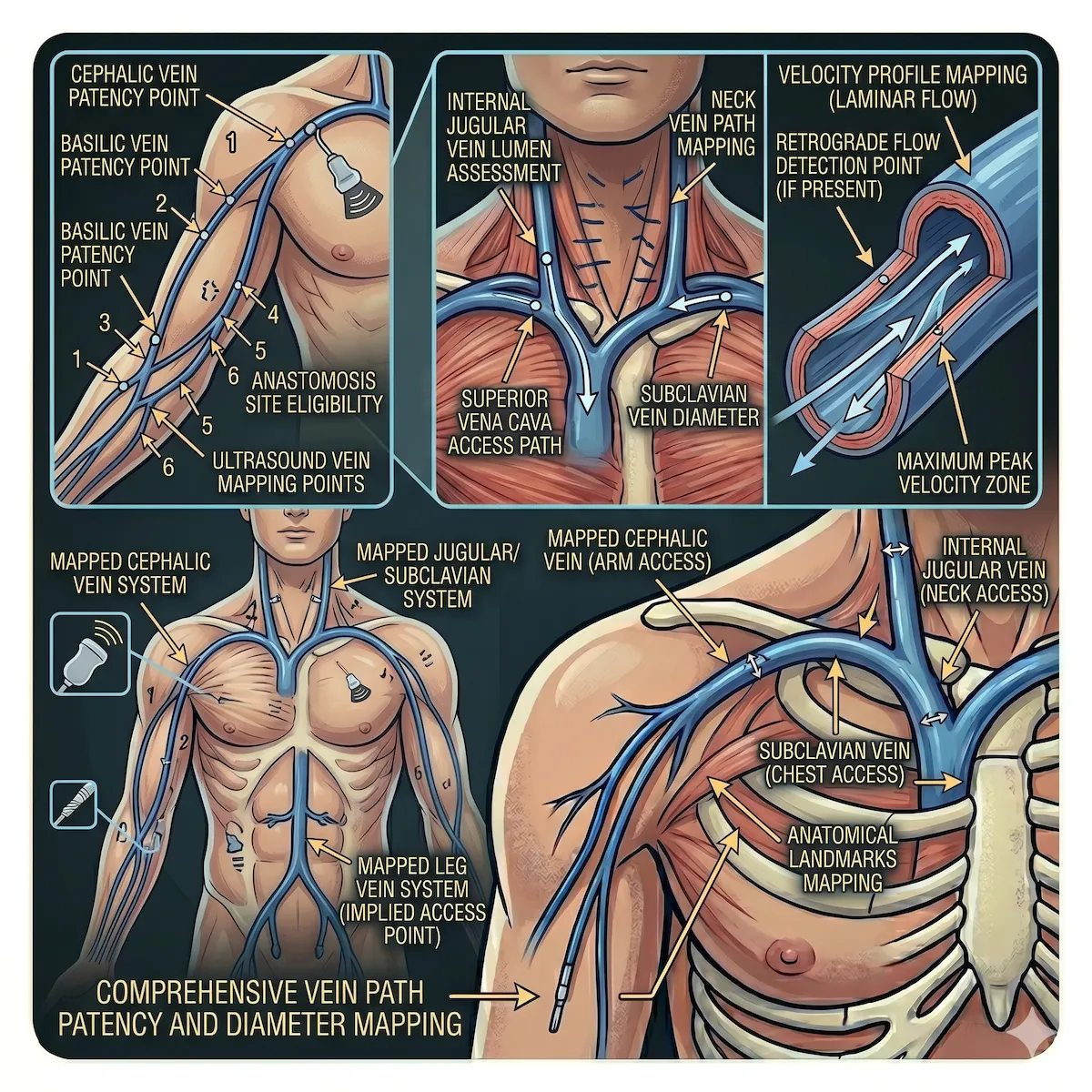
Vessel mapping is an important diagnostic step performed before creating vascular access for treatments like dialysis. It uses advanced ultrasound imaging to assess the condition, size, and location of veins and arteries. This helps doctors select the most suitable blood vessels for access placement, improving success rates and reducing the chances of complications. Proper vessel mapping ensures that procedures such as AV fistula or graft creation are planned with accuracy and long-term effectiveness in mind.
Vessel mapping is commonly advised for patients who are preparing for long-term dialysis or require reliable vascular access. It allows early planning and helps avoid last-minute complications.
Common reasons for vessel mapping include:
• Planning for dialysis access, such as an AV fistula or graft
• Checking the quality and size of veins and arteries
• Identifying blocked or narrowed vessels
• Evaluating previous failed access sites
• Ensuring the best possible location for access creation
How the assessment is done:
• Ultrasound is used to examine veins and arteries in the arms
• Blood flow and vessel diameter are measured
• Suitable access points are identified
• Overall vascular condition is carefully evaluated
This process helps in choosing the safest and most effective access option for each individual.
Vessel mapping is a simple and non-invasive procedure that does not involve any cuts or injections. It is usually completed within a short time.
Before the procedure:
• No special preparation is typically required
• Patients may be asked to stay well hydrated
• Medical history is reviewed by the care team
During the procedure:
• A gel is applied to the skin to help with imaging
• An ultrasound probe is gently moved over the arms
• Images of veins and arteries are captured and analysed
After the procedure:
• There is no recovery time needed
• Patients can return to daily activities immediately
• Results are used to plan the next steps for access placement
The procedure is safe, comfortable, and usually takes about 30 to 60 minutes.
The information obtained from vessel mapping plays a key role in deciding the type and location of vascular access.
Possible options include:
• AV Fistula: Created using the patient’s own blood vessels and considered the preferred choice
• AV Graft: Used when veins are not suitable for a fistula
• Central Venous Catheter: Temporary access in urgent situations
Proper planning helps improve access durability and reduces the need for repeat procedures.
• Improves the success rate of access creation
• Reduces the risk of complications and access failure
• Supports better long-term dialysis outcomes
• Helps avoid unnecessary surgical attempts
• Allows personalised treatment planning
Healthy blood vessels are essential for long-term access function and overall treatment success.
Helpful measures include:
• Managing conditions like diabetes and high blood pressure
• Avoiding needle pricks or IV lines in the access arm
• Eating a balanced and heart-friendly diet
• Staying active as advised by your doctor
• Attending regular follow-up appointments
These steps can help protect your vessels and improve treatment results.
If any concerns are identified during vessel mapping, further care may be recommended to optimise outcomes.
This may include:
• Techniques to preserve veins for future access
• Procedures to improve blood flow
• Revision of existing access if needed
• Regular monitoring through follow-up imaging
These approaches aim to ensure long-term functionality and patient safety.
Vessel mapping is a key step in planning safe and effective vascular access. With early evaluation and proper guidance, patients can benefit from smoother procedures and better long-term results.
Consult a qualified healthcare provider to understand your options and create a treatment plan tailored to your needs.



Dr. Khan is kind and friendly! Always explains everything about my test results so I can understand and lets me ask questions. I'm glad to have him as my Doctor and trust him for my care. The office staff are also very nice. I have had no problem with appointments and no problem contacting the office when needed.
Dr. Amna is great. She put me at ease through the entire process as it isn't easy when you are undergoing multiple procedures to figure out the issue. I do need to see her for the rest of my life but I trust her to be in her care and that she has my best interest. Her nurse Daisy is wonderful as well. They are always prompt to respond to calls, questions or requests. I wouldn't go anywhere else.

Dr. Amberker is a caring and knowledgeable kidney disease specialist. I have total confidence in her excellent treatment. Both my husband and I are fortunate to be Dr. Amberker's patients.
Dr. Pariswala is a great Doctor. I had congestive heart failure and I was in Methodist Hospital for 4 weeks. He took his time and explained to me daily our routine and progress with the medicine he prescribed. He never gave up and he worked wonders for my kidney. I give him Five Stars!
The nurses empowered me with the information and tools I needed to manage my health effectively. Their educational approach made me feel more in control of my condition.


.svg)





















.png)